


How does color rendering index (CRI) affect our eye health?
Color Rendering Index
Color Rendering Index, or CRI, is an important indicator of architectural lighting. CRI indicates the ability of a light source to accurately reflect colors compared to natural light. This index can have a great impact on the actual color of objects in a space. Architectural lighting designers must pay special attention to this point in their designs to provide appropriate light with a high CRI, which greatly contributes to the visual and color impact of the space.
In recent years, with the advancement of lighting technologies, the possibility of using light sources with high and optimal CRI to create lighting in various spaces has emerged. These lighting technologies can improve people’s visual experience with high CRI and contribute to the clarity and reality of colors in the space. Considering this, the use of light sources with high CRI in architectural lighting design is of great importance and should be given special attention. These light sources create appropriate clarity and brightness in spaces and accurately and realistically reflect colors. Therefore, selecting and using light sources with high CRI in architectural lighting design improves the quality and visual experience of users. In general, a deeper understanding of the relationship between CRI and architectural lighting can help designers provide better ways to improve the quality of light and visual experience in different spaces.
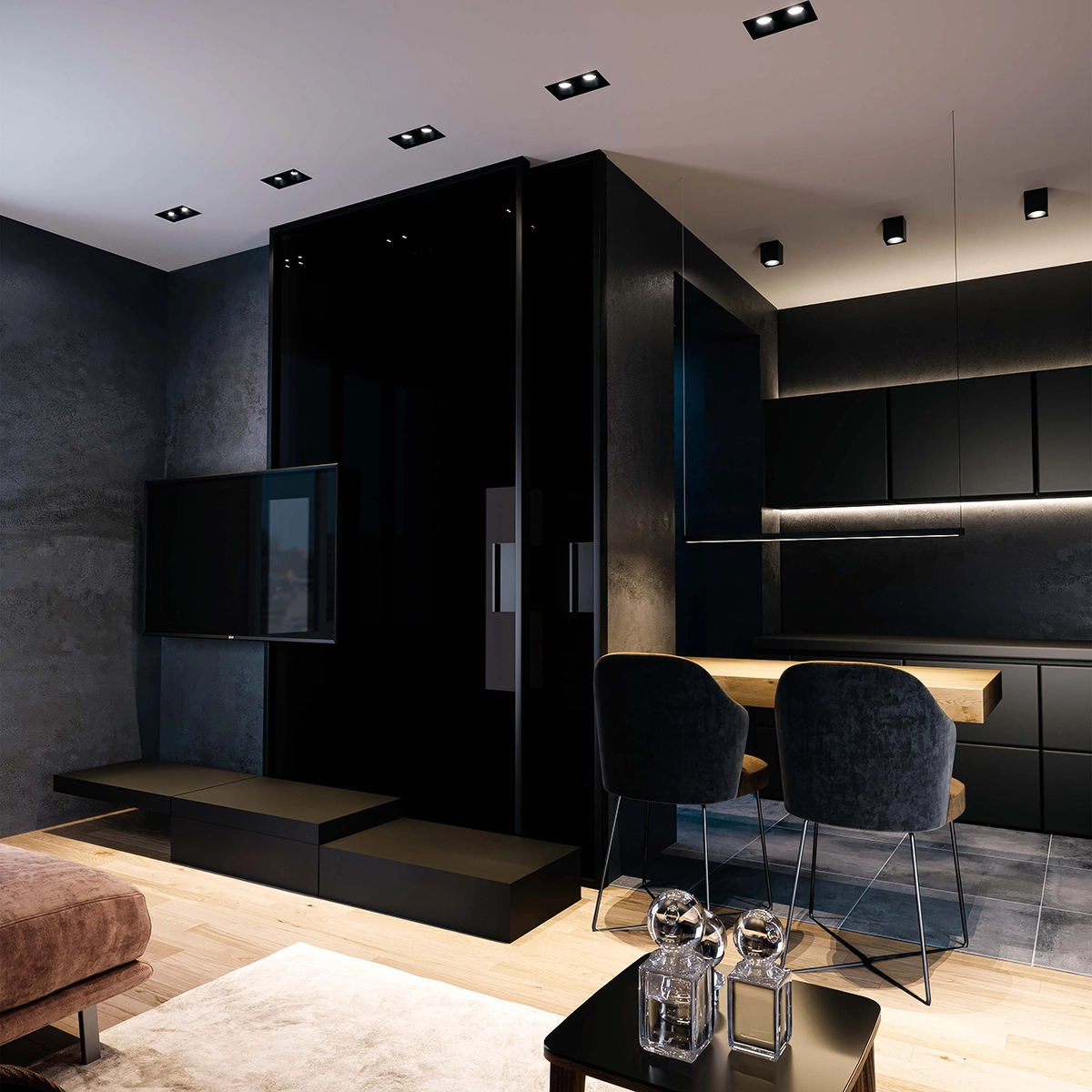
One of these spaces where light is very important is the home. But how can the use of architectural lighting change the space of Haneh? The use of architectural lighting to improve the space of the home can be done in various ways. Below are some general methods that can facilitate the improvement of the space of the home:
1- Proper lighting: Using appropriate and optimal lighting for each space of the home can improve its beauty and efficiency. For example, using soft, welcoming lighting in the living room is useful for creating a sense of comfort and relaxation, and using cool, bright lighting in spaces like the kitchen is useful for increasing energy and focus.
2- Full-screen lighting: Using lighting methods that illuminate all spaces and rooms evenly can provide a feeling of a larger and more open space. For example, using ceiling lighting methods in rooms can create a sense of a larger and more cohesive space for people.
3- Light control: Using light control systems such as dimmers and timers can provide the ability to adjust the light as desired. With this capability, the light intensity can be reduced or increased as needed at any time of the day.
With these methods and the correct use of architectural lighting, you can improve the space of your home in a more complete and attractive way.
And finally, we come to the topic of the relationship between color rendering index and eye health. The truth is that color rendering index (CRI) does not have much direct connection with eye health, but it does have a direct impact on people’s visual experience, which can indirectly affect eye health. Architectural lighting designers often believe that a light with a high CRI will accurately and realistically display colors, which can improve the visual experience. For this reason, using lights with a high CRI can help reduce eye fatigue, increase focus, and improve visual comfort.
Also, lights with a high CRI usually reduce optical interference, which can be beneficial for eye health. Using lights that accurately and realistically display colors can help increase visual satisfaction and quality, which can help with overall eye health and comfort.
In general, the use of high CRI lights in architectural spaces can improve the quality of life of the users of those spaces and, as a result, can indirectly contribute to the health and comfort of the eyes.
Elora is the result of our years of activity under the name of Vera Vision as a designer and lighting engineer. Years that led us to work as lighting designers in numerous projects nationwide. Designers who are known for their innovation, ambition and commitment.
Our awareness of the trends in the design of architectural lighting products in Europe, America and Asia was essential due to our commitment. A necessity that, along with the experience of participating in various projects, was the reason for the formation of the idea of Elora.
At the end of the 90s, and as it became increasingly difficult to import the products we needed, there were only two choices for us. We had to decide whether to use the low-quality products that were available in our country’s market or find a solution to remain innovative and committed as we have been all these years, and we chose the harder path: Elora
Elora is the result of our experience and knowledge of light engineering, architectural projects and the desire to innovate. Elora is our decision to produce quality products in line with architectural lighting trends in Europe, America and Asia, and so far our efforts have been tested twice by participating in the LIT and IDA events to be more confident that we are moving in the right direction.
External sources